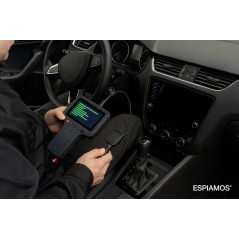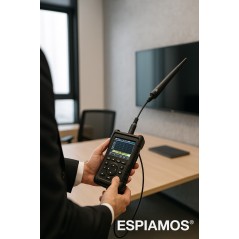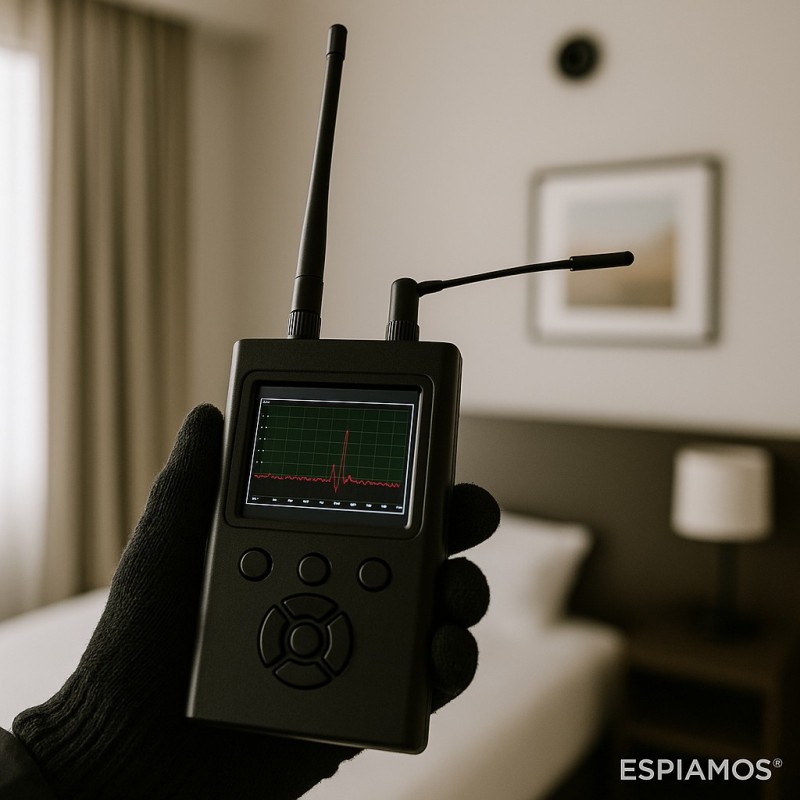
Do you feel like you're being watched in a hotel room, apartment, your bedroom, or your office? Professional detection of hidden cameras , whether on or off, using optical lens detection, radioelectric, thermal, and physical analysis, managed by a specialized law firm and including a legal report . Fast, discreet, and with no travel fees in Madrid and the provincial capitals of Galicia.
 3-Year Warranty: Certified quality on all products
 100% Secure Payment PayPal / Visa / Mastercard
 Free 24h Delivery: Express shipping with DHL, FedEx or UPS
 14-Day Return: No-commitment shopping
A hidden camera can now fit inside a USB charger, a smoke detector, an alarm clock, a plug, a light bulb, or a coat rack. It records in high definition, connects to the local Wi-Fi to send the images to a mobile phone, and costs less than a dinner. It's the kind of device installed in tourist apartments, shared dorm rooms, changing rooms and bathrooms, a professional's office, or a business meeting. And unlike a microphone, what it captures can be a person's most intimate moments.
This service locates hidden cameras, with or without transmission, using optical lens detection, radio and network analysis, thermal inspection, and physical inspection of the premises. It is conducted by a lawyer, includes an explanation of the findings, and concludes with a legal opinion advising you on how to proceed.
ESPIAMOS® sells the equipment and trains its users, but the inspection is carried out by a TSCM lawyer specializing in electronic countermeasures . You contract with the firm, which sends you a quote, engagement letter, and invoice. Everything discovered in your room, house, or office is kept confidential from the first call. ESPIAMOS® simply connects you with them; it doesn't charge a commission or share in the fees.
You can contact the firm through their website or request their details by phone or WhatsApp.
Finding a hidden camera requires discussing uncomfortable topics: who you suspect, what might have been recorded, who was in that room and why. And if the device is found, the images it contains could be the most intimate of your life. A countermeasures technician, however serious, can only offer you a contractual confidentiality agreement. A practicing lawyer is bound by attorney-client privilege , both by law and by their professional association: they cannot reveal what you entrust to them nor be compelled to testify about it, and this duty does not expire when the engagement ends.
In practice, this means that the initial consultation, inspection, photographs, the contents of any device located, and the report are all protected from the very first contact. Nothing is shared with ESPIAMOS®, the establishment, the rental platform, or anyone else, and you alone decide if, when, and for what purpose this material is used: in a complaint, in family court proceedings, or nowhere. If you prefer to know what's in your room without that knowledge going any further, that option exists and is protected.
This is the ideal service when the suspicion is specific—a camera—and the area is limited: a hotel room, a rental apartment, a bedroom, a bathroom, a fitting room, or an office. It's faster and more precise than a full sweep, making it suitable for checking accommodation before unpacking or an apartment before moving in.
If you're also concerned about someone overhearing conversations, or if the space is an entire house or an office with multiple rooms, then electronic home or office/business sweeps are the appropriate solution. These include microphones, recorders, and transmitters. During your initial consultation, our firm will advise you on which option best suits your situation.
Mobile apps that claim to find cameras look for reflections from the flash or devices on Wi-Fi. They fail with cameras that record to a memory card without being connected to anything, those that use their own SIM card, and pinhole lenses hidden behind dark plastic. Professional detection combines four techniques to ensure no camera slips through the cracks of the previous one:
The room is checked by following the lines of sight towards the bed, the bathroom, the desk or the area where one undresses: a camera is only useful if it points at something, and that reduces the number of possible hiding places.
With a hidden camera, the problem isn't just the device itself: it's the footage it has already recorded, where it's stored, and who has seen it. If a camera is located, the lawyer will explain on-site what has been found, what it may have captured, whether it transmits to any location, and what your options are. If you decide to file a complaint, they can personally notify the police on your behalf so they can collect the device, ensuring that the evidence and the memory card are preserved from the outset, with legal counsel present, allowing you to decide the next steps instead of improvising. Furthermore, in the case of a hotel or rental property, they know how to deal with the establishment or platform without compromising your position.
What you shouldn't do is turn off the camera, remove the card, or look at what it has recorded: you destroy traces, break the chain of custody, and, if the device transmits, alert whoever is on the other end.
Recording images of a person in a place where they expect privacy, without their consent, constitutes a crime against privacy, and the severity increases when the images are of a sexual nature. However, there are also legal cameras: those installed by the owner in properly marked common areas, and those installed by a company in entrances and hallways with the necessary information. The report determines which case applies, who may be responsible—including the landlord or the establishment—what legal recourse is available, and how the evidence has been preserved. This document is required to file a complaint, initiate family court proceedings, file a claim against the accommodation provider, or request a labor inspection.
Approximately one hour per visit. A full apartment or an office with several rooms requires more time, which the office estimates during the initial consultation.
In Madrid and the provincial capitals of Galicia, travel is free; in other provinces, travel is quoted separately. The quote, The order and the invoice are from the law firm.
Yes. It's one of the most common cases. The firm arrives discreetly, without visible identification, and can coordinate with you so that the establishment's staff don't need to know until you decide.
They detect some cameras connected to Wi-Fi or very obvious reflections. They don't locate cameras that record to a memory card, those using their own SIM card, or lenses hidden behind dark materials. They can serve as a first look, but not as proof.
Yes. Optical lens detection and electronic component location do not depend on the camera being turned on or transmitting.
Only if a specific item appears suspicious, and always with your authorization, or the establishment's authorization when applicable. The inspection leaves no marks.
There are areas where recording is prohibited under any circumstances—bathrooms, changing rooms, fitting rooms—and others where it is only permitted with proper signage and information. The report assesses each specific case and, if you are a business or establishment, advises you on how to respond to the discovery and how to assist those affected.
It's not designed for that. If the suspicion involves eavesdropping, the appropriate service is a comprehensive electronic sweep of the home or office; if it involves the car, the GPS detection service . The firm can combine them into a single order.
ESPIAMOS® sells optical lens detectors and scanning equipment that allow frequent travelers or professionals to quickly check a room. If you suspect a specific camera, or if what you find could lead to a complaint, professional detection with expert testimony is the right option.
Do you feel like you're being watched in a hotel room, apartment, your bedroom, or your office? Professional detection of hidden cameras , whether on or off, using optical lens detection, radioelectric, thermal, and physical analysis, managed by a specialized law firm and including a legal report . Fast, discreet, and with no travel fees in Madrid and the provincial capitals of Galicia.