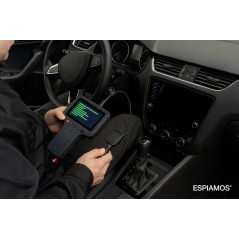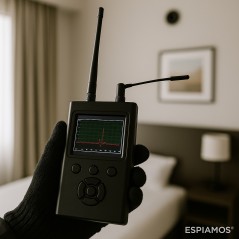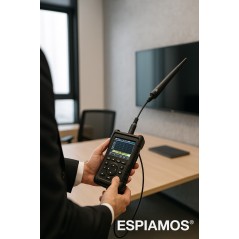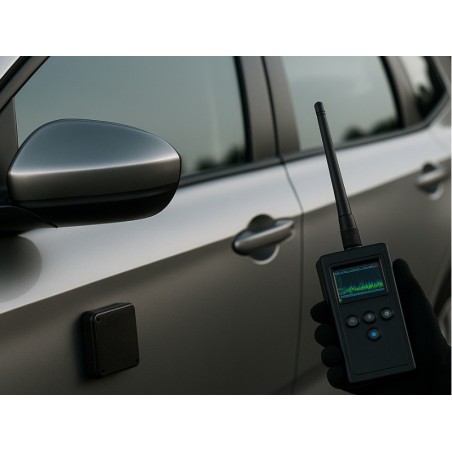
Do you suspect a hidden GPS tracker has been installed in your car ? A professional vehicle inspection using spectrum analyzers and electronic countermeasures equipment, performed by a specialized law firm, includes a legal report . If a device is found, the lawyer will advise you on the spot. No travel fees in Madrid and the provincial capitals of Galicia.
 3-Year Warranty: Certified quality on all products
 100% Secure Payment PayPal / Visa / Mastercard
 Free 24h Delivery: Express shipping with DHL, FedEx or UPS
 14-Day Return: No-commitment shopping
Installing a GPS tracker in someone else's car is easy, cheap, and quick. A device the size of a matchbox, with a magnet and its own battery, is all it takes to track a person's every move for weeks. When suspicion arises—an ex-partner who knows where you've been, a competitor who's getting ahead of your visits, a strange object under the vehicle—the only way to resolve it is a professional vehicle inspection, using equipment capable of detecting both transmitting and non-transmitting devices.

This service includes the physical and radioelectric inspection of the vehicle, the explanation of the results and a legal opinion that assesses what was found and recommends how to act legally.
The inspection and report are carried out by a law firm specializing in electronic sweeps . The engagement is formalized directly with the firm, which provides a quote and invoices for the service. ESPIAMOS® puts you in contact with the firm; it does not receive any commission for this service.
To request the inspection, contact the office through its website or ask us for its contact information by phone or WhatsApp.
A GPS tracker doesn't steal a single piece of information: it steals your entire life. Where you sleep, which doctor you see, who you eat with, which clients you visit, when you're out of the house. To properly inspect the vehicle, your lawyer needs you to tell them some of that, and who you suspect. Often, the suspect is someone very close—a partner, an ex, a business associate, a sibling—and it's a situation you'd rather keep private. A practicing lawyer is bound by attorney-client privilege, both by law and by their professional association's bylaws: they cannot reveal what you entrust to them or what they discover in the course of their work, they cannot be compelled to testify about it, and this duty doesn't end with the service. It's a level of protection that no technician or shop can offer you.
This means that the consultation, the inspection, the photographs, any device found, and the report remain between you and the firm. Nothing is communicated to ESPIAMOS® or anyone else, and the discovery will not become a formal complaint unless you choose to do so: you can use it in family court proceedings, keep it for later, or simply be aware that you were being followed and use that information as you see fit.
Current GPS trackers transmit in short bursts, at intervals, or only when they detect movement; many use low-power networks like LTE-M or NB-IoT, or short-range Bluetooth beacons supported by nearby phones, such as AirTags; and some simply record the position without transmitting it. A few minutes' check with a basic detector doesn't rule out any of these possibilities.
If a device is discovered, the technical finding is just the beginning. Who installed it, whether it was legal to do so, what legal avenues exist (civil and/or criminal), and how to preserve the evidence so it cannot be challenged later are all legal questions. Not every tracking device is illegal: it could have been installed by the vehicle owner, a company in its fleet, a finance company under contract, or a third party without consent; the classification depends on the context.
The legal opinion answers these questions based on the inspection carried out and is written by the same lawyer who led it. It is the document to use when filing a complaint, in family law proceedings, or in a labor dispute.
It's the difference between hiring a technician and hiring a practicing lawyer. If a tracking device or any other device is located, the lawyer advises you on the spot, about the vehicle itself, what has been found, and the options available to you, and the strategy is decided right there, with you.
If you decide to file a report, your lawyer can directly notify the police on your behalf so they can take charge of the device from that moment on. This ensures the chain of custody begins with your lawyer present from the very start, reducing the risk of the evidence being challenged later. It also prevents you from having to face an unfamiliar situation alone: it's not you who has to explain to the police what has been found and why, but your lawyer.
What you shouldn't do, with or without a lawyer, is remove the device, tamper with it, or confront the person you suspect. This is a natural reaction, but it destroys the evidence and any traces it might contain.

In Madrid and the provincial capitals of Galicia, there is no travel fee, and we can do inspections at your workshop or home. Inspections are also possible in other provinces; travel fees are quoted separately. Home inspections are more discreet, but they don't allow access to the underside of the vehicle; if anything is found, it can be completed at our workshop.
About two hours for a car, depending on the type of vehicle, the environment and the level of analysis required.
Vehicle inspections start at €795 including VAT; the office will send you a fixed price quote after the initial consultation, and the office will issue the invoice. Please inquire about conditions for two or more vehicles and for fleets.
With the law firm. The estimate, engagement letter, privacy policy, and invoice are from the firm.
No, unless necessary and with your express authorization. The inspection is designed not to alter the vehicle.
Yes. At the end, the lawyer explains what was observed and, if anything was found, how to proceed. You will receive the legal opinion in writing in the following days, in PDF format signed by the lawyer.
It depends on who, in what vehicle, and for what purpose. A third party without consent, in a vehicle you own, is committing unlawful intrusion and possibly a crime; a company in a fleet vehicle with the proper information is not. Therefore, the assessment of the discovery is a legal matter and falls under the purview of the law firm.
Yes. The methodology is adapted to the size and concealment areas of each vehicle.
Yes, ESPIAMOS® distributes electronic scanning equipment and offers training on how to operate it. This will allow you to perform routine inspections. For specific cases, a professional inspection with legal certification is the appropriate option.
No. This service is focused exclusively on detecting GPS trackers , especially those that transmit their position via mobile networks such as GSM, 3G, 4G, or LTE-M. It does not include the search for hidden cameras, spy microphones, or audio recorders . If you require a comprehensive inspection to detect other surveillance devices, we recommend the TSCM Comprehensive Electronic Sweep service, which is more extensive and tailored to those types of threats.
Do you suspect a hidden GPS tracker has been installed in your car ? A professional vehicle inspection using spectrum analyzers and electronic countermeasures equipment, performed by a specialized law firm, includes a legal report . If a device is found, the lawyer will advise you on the spot. No travel fees in Madrid and the provincial capitals of Galicia.