- New


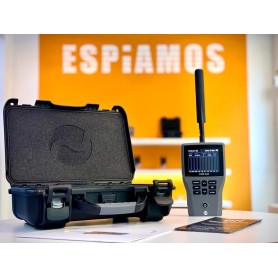
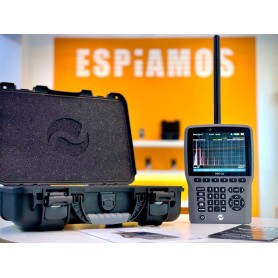
The JJN Digital WAM-X10+ is the next generation of the WAM-X10: a handheld frequency detector that monitors and records RF activity from 10 MHz to 14 GHz, with worldwide 2G/3G/4G/5G cellular coverage, L-band satellite phone detection, and standalone Wi-Fi/Bluetooth detectors in the 2.4, 5, and new 6 GHz bands.
 3-Year Warranty: Certified quality on all products
 100% Secure Payment PayPal / Visa / Mastercard
 Free 24h Delivery: Express shipping with DHL, FedEx or UPS
 14-Day Return: No-commitment shopping
The JJN Digital WAM-X10+ frequency detector is the next generation of the WAM-X10: a portable wireless activity monitor that detects and records radio frequency transmissions between 10 MHz and 14 GHz, with worldwide 2G/3G/4G/5G cellular coverage, L-band satellite phone detection, and separate detectors for Wi-Fi and Bluetooth in the 2.4 GHz, 5 GHz, and new 6 GHz bands.
It is designed for TSCM operators, security departments, detectives, and organizations that need to check meeting rooms, vehicles, testing centers, or other spaces where the use of cellular or wireless devices is prohibited. This sheet details the new features compared to the WAM-X10, its specifications, verified technical data, contents of the carrying case, and answers to frequently asked questions.
The WAM-X10+ is a complete redesign of the device, not just a simple revision. It retains the handheld form factor, machined aluminum housing, and 3.5-inch color TFT display, but incorporates a high-gain RF input stage and several new features geared toward current threats.
The most relevant improvements compared to the original WAM-X10 are the following:
The system combines three independent detectors (cellular, broadband, and Wi-Fi/Bluetooth) with an event log and a graphical mode that allow for real-time and retrospective analysis of RF activity. Each module is described below.
The cell phone detector covers international bands between 300 MHz and 6 GHz with a maximum sensitivity of -70 dBm, according to the manufacturer's datasheet. Each band has a 20-segment intensity meter, making it easy to pinpoint the source of a signal while moving around the room or vehicle. L-band detection also allows for the identification of satellite phone uplinks, a feature not found in the previous model.
The broadband detector offers the widest coverage of the device, from 10 MHz to 14,000 MHz, and simultaneously displays the frequency of the detected signal using a frequency counter that operates up to 6 GHz. The Livescan function graphically displays the signal pattern in real time, helping to distinguish continuous transmissions from pulsed or bursty emissions, typical of GPS trackers.
The third detector focuses on the 2400-2485 MHz, 4900-5950 MHz, and 5925-7125 MHz bands. The manufacturer states that its algorithms analyze the detected signal to determine its type (Bluetooth, Wi-Fi, or other transmission in those bands). It is particularly useful against record-and-forward devices that record audio for hours and transmit it in short, periodic bursts, as well as against wireless cameras.
The WAM-X10+ stores up to 4,000 events with date and time, band, duration, and signal strength. The log can be viewed on screen as a list or as a historical graph, and downloaded to the included USB memory stick for analysis or inclusion in a report. For example, A series of short, regular bursts on the same band may indicate the presence of a GSM/GPS locator, while activity concentrated at certain times may signal unauthorized use of phones in sensitive areas.
According to the manufacturer's documentation, the equipment is designed to detect emissions from the following types of devices, provided they are transmitting at the time of inspection:
If your priority is locating beacons on vehicles, we recommend the guide on how to use a frequency detector to identify GPS trackers , which explains how to interpret the pulsed emissions of these devices.

The WAM-X10+ is a professional-grade device. Its price, event logging capabilities, and worldwide cellular coverage place it above detectors for occasional use and make it ideal for those who conduct recurring inspections or need to document their results.
You can see the rest of the manufacturer's detectors and analyzers in the JJN Digital category in Spain .
The operation is performed using the keyboard and on-screen menus. Generally speaking, an inspection with this equipment follows these steps:
Although the operation is intuitive, correctly interpreting the data from a detector of this level requires expertise. Therefore, we offer training in the use of frequency detectors designed to help you get the most out of the equipment from day one.
 and usage considerations
Like any radio frequency detector, The WAM-X10+ can only detect devices that are transmitting. A device that is turned off, in standby mode, or recording without transmitting does not generate a signal and requires other inspection methods, such as a nonlinear joint detector or physical inspection. Therefore, this type of equipment is usually integrated into a complete TSCM electronic sweep and does not replace the other techniques.
The manufacturer's stated detection range of up to 50 meters depends on signal strength and environmental conditions. In urban areas with high emissions, it's common to detect legitimate activity from outside, so a detection might indicate the presence of a device, but this should be analyzed and confirmed before drawing any conclusions. The frequency counter operates up to 6 GHz, while the broadband detector covers up to 14 GHz.
The USB port is solely for downloading the log to a USB drive; it is not for connecting the device to a computer in real time. For those requiring detailed spectral analysis with frequency identification across the entire range, the CAM-GX5 from the same manufacturer or a spectrum analyzer are complementary alternatives.
Typical values declared by the manufacturer at 20 °C:
| Parameter | Specification |
|---|---|
| Broadband range | 10 MHz – 14,000 MHz (14 GHz) |
| Frequency counter | Up to 6 GHz |
| Cellular regions | United Kingdom, Europe, Asia, Africa, North America, South America, Australia |
| Cellular range | International bands from 300 MHz to 6 GHz, maximum 10 visible bands, sensitivity -70 dBm max. |
| Satellite phones | L-band – 1.6 GHz |
| 2.4 / 5 / 6 GHz bands | 2400–2485 MHz, 4900–5950 MHz and 5925–7125 MHz |
| Detection range | Up to 50 m, depending on signal strength and environmental conditions |
| Screen | 3.5" high-contrast color TFT |
| Event Log | Up to 4,000 events (date/time, band, duration, intensity) |
| Warning modes | Visual, audible beep, and silent vibration |
| Battery | Internal rechargeable lithium-polymer battery, up to 8 hours of operation |
| Burden | USB-C, about 4 hours |
| USB port | For downloading the log to a USB drive only |
| Processed | RISC microcontroller with real-time clock |
| Operating temperature | -15 °C to +50 °C, relative humidity < 90% |
| Casing | Aircraft-grade machined aluminum |
| Dimensions | 173 × 103 × 28 mm |
| Weight | Main unit 500 g; complete case 2.4 kg |
| Manufacturing | Designed and manufactured in the United Kingdom |
The WAM-X10+ is a complete redesign that adds cellular region selection with worldwide 2G/3G/4G/5G coverage, a new 6 GHz band for Wi-Fi 6E, L-band satellite phone detection, a higher-gain RF input stage, new articulated antennas, an included directional antenna, USB-C charging, and a claimed battery life of up to 8 hours. The broadband range up to 14 GHz, the 3.5" TFT display, and the 4,000-event logging capability remain unchanged.
No. Like all frequency detectors, it only detects devices that are transmitting. Many locators transmit in periodic bursts. Therefore, the graphical mode and event logging help identify them if monitored for a sufficient period of time. For non-emitting devices, other methods are required, such as non-linear joint detection or physical inspection.
Yes. Simply select the region you'll be working in (Europe, Asia, Africa, North America, South America, Australia, or the United Kingdom) in the settings, and the device will monitor the cellular bands in that area. The charger includes international adapters.
Yes. The complete recording, including date and time, band, duration, and intensity of each event, is downloaded to the included USB drive for storage or analysis on a computer. The USB port does not allow for direct real-time connection to a PC.
Basic operation is simple thanks to the on-screen menus and the new keypad. However, correctly interpreting detections in environments with high RF activity and distinguishing legitimate emissions from suspicious devices requires practice, so we recommend specific training for those new to using professional detectors.
The WAM-X10+ updates a benchmark device for detecting cellular and wireless activity with the features required for today's professional inspections: global 5G coverage, 6 GHz band, L-band satellite detection, and an exportable event log that transforms every inspection into documentable information. If you need advice on whether this device meets your needs or how to integrate it into your sweep procedures, you can consult the other devices in the frequency detectors category or contact our technical team.
The JJN Digital WAM-X10+ is the next generation of the WAM-X10: a handheld frequency detector that monitors and records RF activity from 10 MHz to 14 GHz, with worldwide 2G/3G/4G/5G cellular coverage, L-band satellite phone detection, and standalone Wi-Fi/Bluetooth detectors in the 2.4, 5, and new 6 GHz bands.